Ethical Hacking
Introduction: Why Ethical Hacking Matters More Than Ever
The internet has become the backbone of modern life. We use it for banking, education, shopping, healthcare, business operations, and personal communication. Every login we make, every payment we process, and every file we upload depends on digital systems staying secure. Unfortunately, in 2026, cybercrime is growing faster than ever before. Hackers now use automation, artificial intelligence, and social engineering to attack not only large corporations, but also small websites, freelancers, startups, bloggers, and everyday smartphone users.
As a result, digital security is no longer optional. It is a necessity. This urgent need for protection has created massive global demand for ethical hackers, also known as white-hat hackers. These professionals legally break into systems to find weaknesses before criminals can exploit them.
If you have ever wondered what ethical hacking really means, whether it is legal, whether beginners can learn it, and whether it is a good career choice in 2026, this guide will give you clear and simple answers.
What Is Ethical Hacking? (Simple Definition)
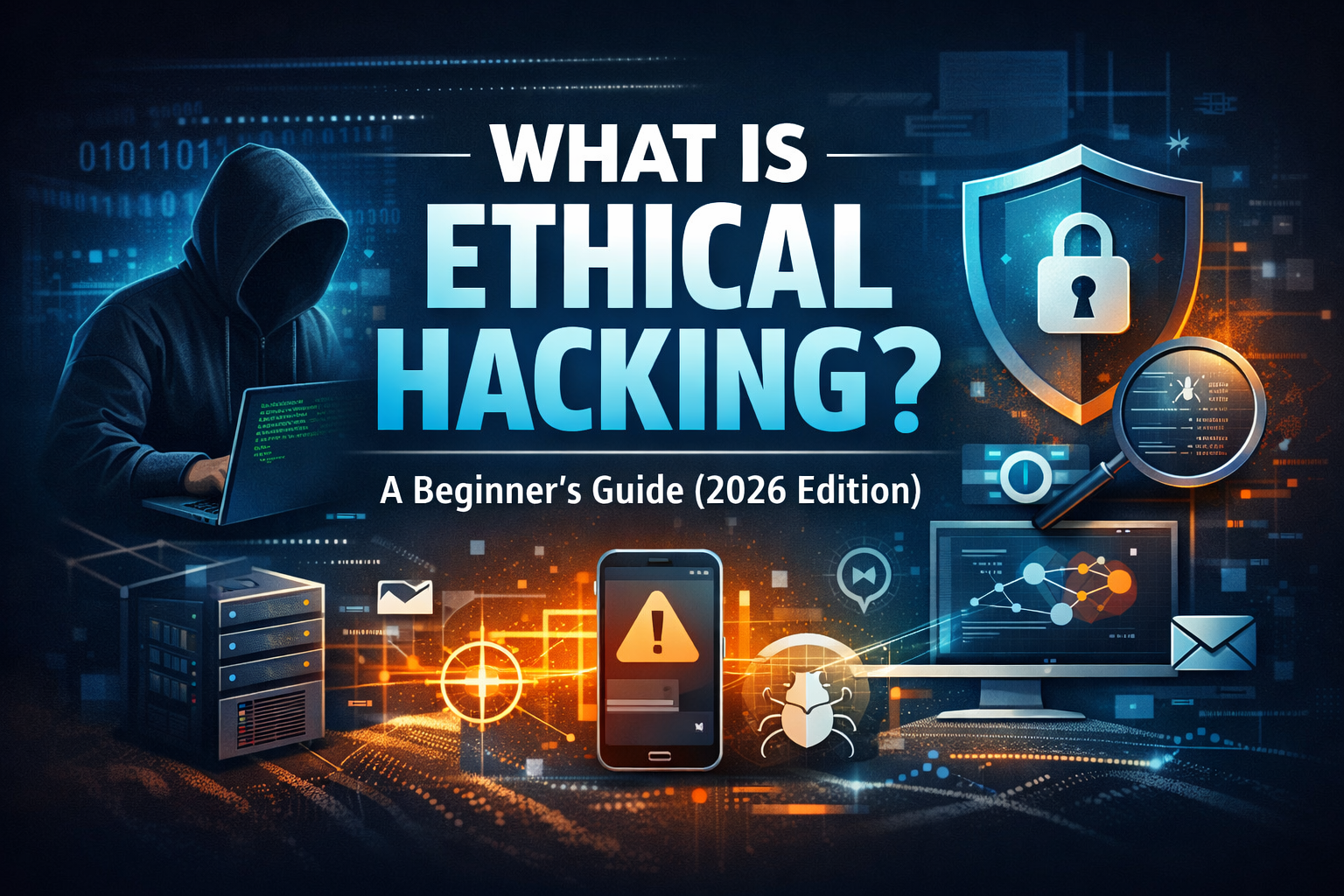
Ethical hacking is the legal practice of testing computer systems, networks, applications, and websites to find security vulnerabilities so they can be fixed before malicious hackers exploit them. Instead of waiting for a real cyberattack to happen, organizations hire ethical hackers to think and act like attackers in a controlled and lawful way.
In simple words, ethical hackers use real hacking techniques for protection rather than destruction. They follow strict legal rules and only test systems after receiving written permission from the owner.
Ethical Hacking vs Illegal Hacking
One of the biggest misunderstandings among beginners is confusing ethical hacking with illegal hacking. While both use similar tools and techniques, the difference lies in permission, intention, and legal authority.
| Feature | Ethical Hacking | Illegal Hacking |
|---|---|---|
| Permission | Written legal authorization | No permission |
| Purpose | Improve security | Steal data or cause harm |
| Legality | Fully legal | Criminal offense |
| Payment | Paid by companies | Illegal profit |
| Consequences | Career growth and recognition | Jail, fines, lawsuits |
Who Is an Ethical Hacker?
An ethical hacker, also known as a white-hat hacker, is a cybersecurity professional hired to test and strengthen digital defenses. These professionals simulate real-world cyberattacks to discover vulnerabilities in websites, mobile apps, networks, cloud platforms, and internal systems.
They are trusted security partners for banks, hospitals, governments, startups, and technology companies that want to protect sensitive data and customer information.
Types of Hackers You Should Know
Understanding the different categories of hackers helps clarify where ethical hackers stand in the cybersecurity world.
| Type | Description |
|---|---|
| White Hat | Legal ethical hackers |
| Black Hat | Criminal hackers |
| Grey Hat | Hack without permission but not always malicious |
| Script Kiddies | Beginners using ready-made tools |
| Hacktivists | Hack for political or social causes |
| Nation-State Hackers | Government-backed cyber attackers |
What Do Ethical Hackers Actually Do?
In real-world practice, ethical hackers perform structured security testing known as penetration testing. Their job is not random hacking, but a carefully planned security assessment.
Their daily work often includes scanning networks, analyzing software code, testing login systems, simulating phishing attacks, and writing professional reports for management and developers.
How Ethical Hacking Works (Step-by-Step)
Ethical hacking follows a professional and documented process designed to avoid legal trouble and ensure accurate security testing.
Step 1: Permission and Scope Definition
Every ethical hacking project begins with a signed agreement that defines what systems can be tested and what actions are allowed.
Step 2: Reconnaissance
Hackers collect information about the target such as IP addresses, domain names, technologies used, and server details.
Step 3: Scanning
Tools are used to find open ports, running services, and outdated software versions.
Step 4: Exploitation
Real attacks such as SQL injection or cross-site scripting are tested.
Step 5: Post-Exploitation
The hacker checks how deep access can go and what data could be exposed.
Step 6: Reporting
A professional report is created explaining vulnerabilities and how to fix them.
Common Ethical Hacking Techniques
Ethical hackers rely on well-known attack techniques to test security strength.
| Technique | Purpose |
|---|---|
| SQL Injection | Steal or modify database data |
| XSS Attacks | Inject malicious scripts |
| Brute Force | Crack passwords |
| Phishing Simulation | Test human security |
| Privilege Escalation | Gain admin access |
| Session Hijacking | Steal user sessions |
Tools Used by Ethical Hackers
Professional ethical hackers use specialized tools to automate scanning, testing, and exploitation.
| Tool | Purpose |
|---|---|
| Nmap | Network scanning |
| Burp Suite | Web app testing |
| Metasploit | Exploitation framework |
| Wireshark | Packet analysis |
| John the Ripper | Password cracking |
| Aircrack-ng | Wi-Fi hacking |
| Kali Linux | Ethical hacking OS |
Is Ethical Hacking Legal?
Ethical hacking is completely legal when performed with written permission and within agreed limits. Without authorization, even testing a friend’s website could result in legal trouble.
Why Ethical Hacking Is a High-Demand Career in 2026
Cybersecurity spending now exceeds 250 billion dollars per year globally. Organizations are under constant attack from ransomware gangs, phishing campaigns, and AI-powered malware.
Major demand drivers include cloud computing growth, remote work security risks, stricter data protection laws, and the explosion of e-commerce.
Ethical Hacker Salary (2026 Estimates)
| Country | Average Salary |
|---|---|
| USA | $95,000 – $160,000 |
| Canada | $80,000 – $130,000 |
| UK | £60,000 – £110,000 |
| Pakistan | PKR 200,000 – 600,000/month |
| India | ₹8 – 25 LPA |
| Remote Freelance | $40 – $150/hour |
Skills Required to Become an Ethical Hacker
To succeed in ethical hacking, learners must build both technical and professional skills.
Technical skills include networking basics, Linux commands, web technologies, Python or JavaScript programming, databases, and operating systems.
Soft skills include analytical thinking, ethical judgment, report writing, communication, and problem-solving.
Best Certifications for Ethical Hacking
| Certification | Level |
|---|---|
| CEH | Beginner |
| Security+ | Beginner |
| OSCP | Advanced |
| CISM | Advanced |
| CISSP | Expert |
How to Become an Ethical Hacker (Beginner Roadmap)
The learning path for ethical hacking is structured and beginner-friendly.
Start by learning networking, Linux, HTML, and Python. Then move on to security concepts such as encryption, firewalls, and VPNs. Practice legally on platforms like TryHackMe and Hack The Box. After building confidence, work toward certifications and create a small security testing portfolio.
Can You Learn Ethical Hacking Without a Degree?
Yes, a formal degree is not mandatory. Many of the world’s top ethical hackers are self-taught.
What truly matters is practical skill, hands-on experience, recognized certifications, and ethical behavior.
Ethical Hacking Myths
| Myth | Reality |
|---|---|
| Only geniuses can hack | Anyone can learn |
| You must break laws | False |
| You need expensive tools | Many tools are free |
| It’s instant money | Requires time |
Ethical Hacking vs Cybersecurity
| Ethical Hacking | Cybersecurity |
|---|---|
| Offensive testing | Defensive protection |
| Break systems | Secure systems |
| Simulate attacks | Prevent attacks |
Future of Ethical Hacking
The future of ethical hacking is closely tied to emerging technologies. AI-driven attacks, IoT vulnerabilities, automated pentesting tools, and cloud security challenges will dominate the next decade.
Ethical hackers will remain essential defenders of the digital world.
FAQs
Is ethical hacking a good career in 2026?
Yes. Demand is rising rapidly.
Can beginners learn ethical hacking?
Absolutely, with structured learning.
Is ethical hacking illegal?
Only without permission.
How long does it take to learn?
Six to eighteen months for job readiness.
Final Thoughts
Ethical hacking is one of the most respected and future-proof careers in modern technology. It offers high income potential, remote work opportunities, global demand, and meaningful social impact.
If you enjoy problem-solving, technology, and protecting people from digital threats, ethical hacking could be the perfect career path for you in 2026 and beyond.
About The Author