Learning ethical hacking on free platforms
Introduction: Why Learning Ethical Hacking for Free Is Now Possible
The world is becoming more digital every year. From online banking and shopping to cloud storage and remote work, almost everything we do now depends on secure computer systems and websites. At the same time, cyberattacks are increasing rapidly. Hackers target small blogs, startups, e‑commerce stores, government websites, and even ordinary social‑media users. Because of this, ethical hacking has become one of the most valuable skills of the modern era.
For many beginners, the biggest fear is cost. Most people think they must spend thousands of dollars on expensive courses to learn ethical hacking. The truth is very different in 2026. Today, there are powerful and completely free platforms that allow anyone to learn real‑world hacking skills legally and ethically. These platforms are used by students, self‑learners, and even professional cybersecurity engineers.
In this detailed beginner‑friendly guide, you will discover the best free platforms to learn ethical hacking, what each platform is best for, how beginners should use them properly, and a simple learning roadmap that can take you from zero to job‑ready skills.
What Makes a Platform Good for Learning Ethical Hacking?
Before jumping into the list of platforms, it is important to understand what actually makes a learning website useful for ethical hacking. Not every website that claims to teach hacking provides real value or safe practice.
A good ethical hacking platform should provide hands‑on labs where you can attack vulnerable systems legally. It should explain why a vulnerability exists, how it is exploited, and how it is fixed. It should also be beginner‑friendly and not overwhelm learners with advanced jargon on day one.
Here are the most important features you should look for in a free ethical hacking platform:
- Hands‑on labs and challenges
- Beginner‑friendly explanations
- Legal and safe environments
- Real‑world attack simulations
- Clear learning paths
- Active community or forums
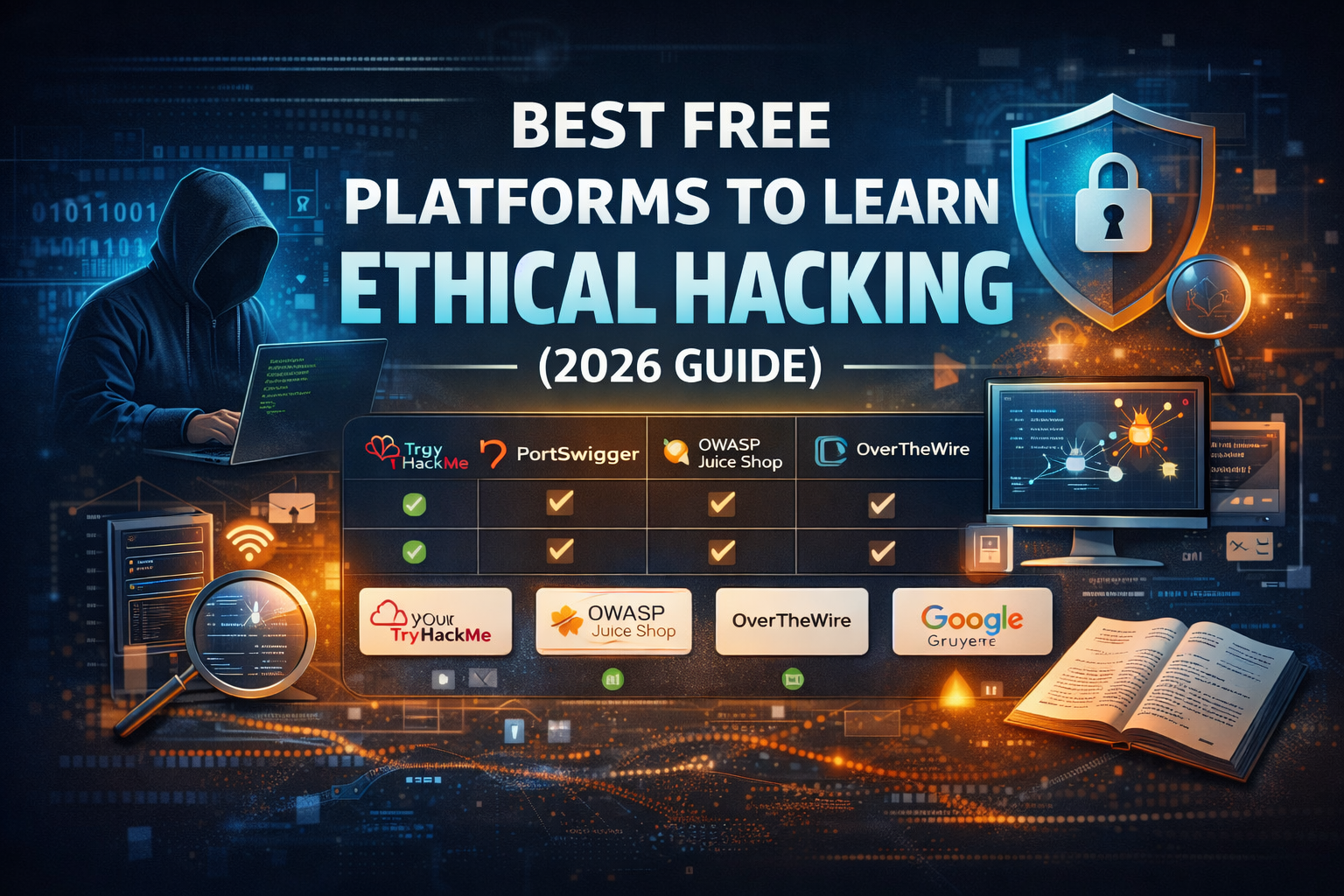
Quick Comparison Table: Best Free Platforms
| Platform | Level | Best For | Free Features |
|---|---|---|---|
| TryHackMe | Beginner–Intermediate | Guided learning paths | Free rooms, browser labs |
| PortSwigger Academy | Beginner–Advanced | Web hacking mastery | All labs free |
| OverTheWire | Beginner | Linux & fundamentals | All games free |
| OWASP Juice Shop | Intermediate | Web vulnerabilities | Fully free |
| Google Gruyere | Beginner–Intermediate | Web security basics | Fully free |
| picoCTF | Beginner–Intermediate | CTF practice | Free challenges |
1. TryHackMe (Best Overall for Beginners)
TryHackMe is widely considered the best free starting point for ethical hacking beginners. It feels more like an interactive online classroom than a random hacking website. Instead of throwing you into difficult challenges, it teaches you concepts step by step and then lets you practice them immediately.
One of the biggest advantages of TryHackMe is that you can run labs directly inside your browser. You do not even need to install Linux or special tools in the beginning. This makes it extremely beginner‑friendly.
Why TryHackMe Is Great
- Step‑by‑step guided lessons
- Browser‑based virtual machines
- Beginner‑friendly interface
- Clear explanations before each task
What You Learn Here
- Linux basics
- Networking fundamentals
- Web hacking basics
- Enumeration techniques
- Basic penetration‑testing workflow
TryHackMe is ideal for your first 2–3 months of learning ethical hacking.
2. PortSwigger Web Security Academy (Best for Web Hacking)
PortSwigger Web Security Academy is one of the most powerful free resources for learning web application security. It is created by the same company that builds Burp Suite, which is used by professional penetration testers worldwide.
This platform focuses entirely on real‑world web vulnerabilities such as SQL injection, cross‑site scripting, authentication flaws, and business‑logic bugs. Each vulnerability category includes lessons, examples, and interactive labs.
Why PortSwigger Is Amazing
- 100% free professional‑grade labs
- Realistic vulnerabilities
- Clear explanations
- Industry‑recognized content
What You Learn Here
- SQL injection
- Cross‑site scripting (XSS)
- CSRF
- Authentication bypass
- Session management flaws
If you want to become a web penetration tester, PortSwigger is a must‑use platform.
3. OverTheWire (Best for Linux & Fundamentals)
OverTheWire is a collection of security “wargames” designed to teach Linux and basic hacking skills. It looks simple at first, but it is extremely effective for building a strong foundation.
The most famous game is Bandit, which teaches file permissions, command‑line navigation, and basic security concepts. These skills are essential for every ethical hacker.
Why OverTheWire Is Useful
- Perfect for absolute beginners
- Teaches core Linux skills
- Strengthens problem‑solving ability
- Free forever
4. OWASP Juice Shop (Best for Practicing Web Vulnerabilities)
OWASP Juice Shop is an intentionally vulnerable web application created by the OWASP Foundation. It is used by universities and professionals to practice web hacking techniques legally.
You can run it locally on your computer or online and test real vulnerabilities like XSS, SQL injection, authentication flaws, and insecure direct object references.
Why Juice Shop Is Powerful
- Realistic vulnerable web app
- Industry‑standard training project
- Open‑source and free
5. Google Gruyere (Best for Web Security Basics)
Google Gruyere is a small but powerful web application created by Google to teach web security flaws. It demonstrates common vulnerabilities in a simple environment.
It is perfect for beginners who want to understand how real vulnerabilities work without complex setups.
6. picoCTF (Best for Capture the Flag Practice)
picoCTF is a beginner‑friendly Capture the Flag platform created by Carnegie Mellon University. It teaches hacking through fun challenges that cover cryptography, reverse engineering, web exploitation, and forensics.
It is excellent for building problem‑solving and thinking‑like‑a‑hacker skills.
How Beginners Should Use These Platforms
Many beginners fail because they jump randomly between platforms. Ethical hacking requires structure and patience.
Here is a simple learning path:
- Start with TryHackMe
- Move to OverTheWire
- Practice web hacking on PortSwigger
- Use Juice Shop and Gruyere
- Play picoCTF challenges
30‑Day Beginner Roadmap
| Day Range | Focus |
|---|---|
| Days 1–7 | TryHackMe basics |
| Days 8–14 | OverTheWire Bandit |
| Days 15–21 | PortSwigger labs |
| Days 22–30 | Juice Shop + picoCTF |
Common Mistakes Beginners Make
Many learners quit early because they make avoidable mistakes.
- Skipping basics
- Only watching videos
- Practicing illegally
- Giving up too early
Is It Legal to Practice on These Platforms?
Yes. All platforms listed here are legal and safe.
Never hack real websites without permission. That is a crime.
FAQs
Are these platforms really free?
Yes. All listed platforms offer free access.
Can I get a job using only free resources?
Yes, if you practice consistently and build skills.
How long does it take to learn ethical hacking?
Six to twelve months for job‑ready skills.
Final Thoughts
Ethical hacking is no longer locked behind expensive courses. With the right free platforms and consistent practice, anyone can build real cybersecurity skills.
If you are serious about learning ethical hacking in 2026, start today. Your future career depends on the actions you take now.
About The Author