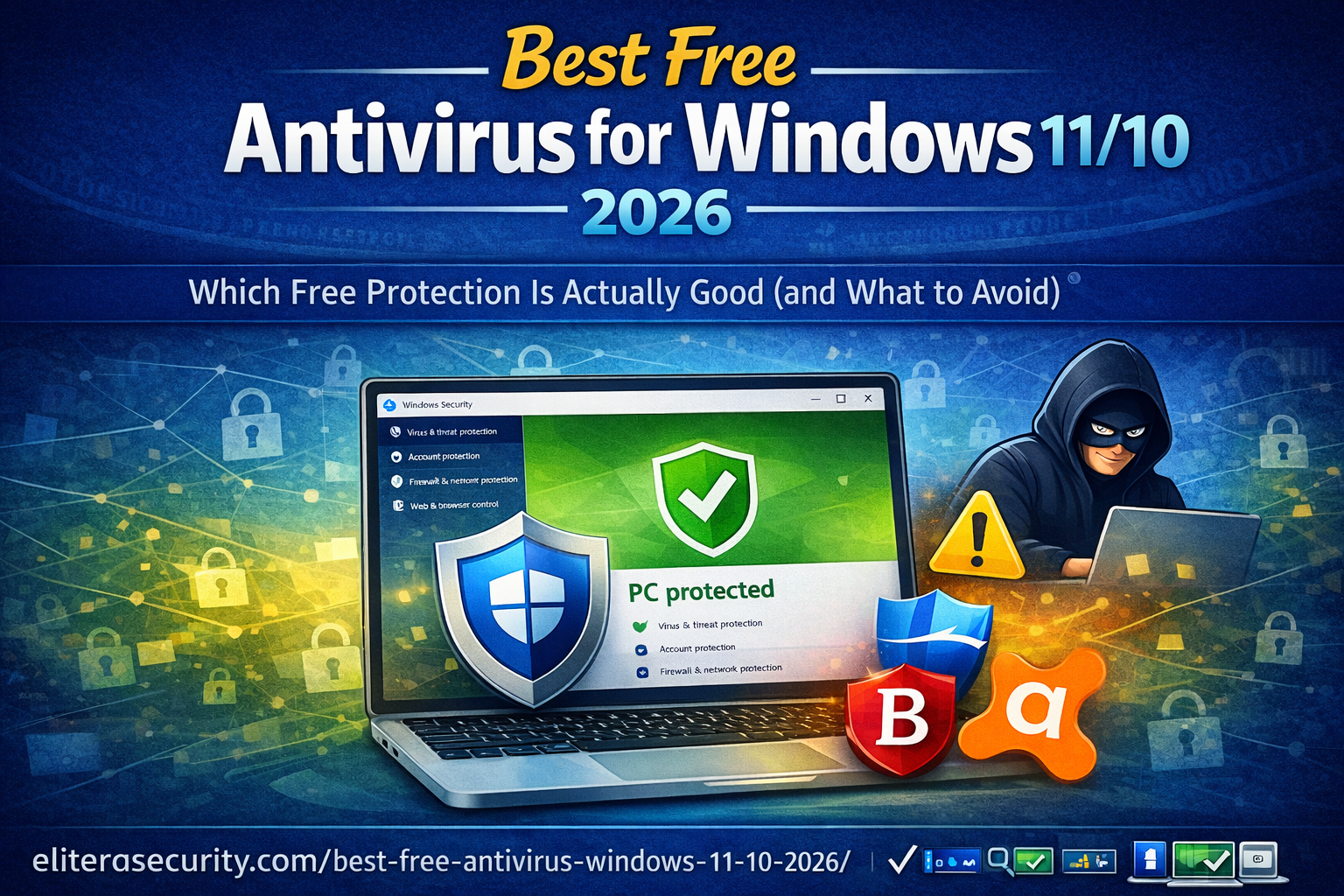
Best Free Antivirus for Windows 11/10
If your laptop suddenly feels slow, your browser keeps redirecting, random pop-ups appear, or you see “your PC is infected” warnings from unknown websites, you’re not alone. In 2026, most infections don’t look like old-school “viruses.” They show up as fake update popups, unwanted browser extensions, adware, password-stealing malware, or silent background processes that abuse your CPU.
The good news is you don’t need to pay to get strong protection. Windows 11/10 already includes a solid built-in antivirus, and there are a few trusted free options you can add if you want extra layers. The key is choosing the right tool and avoiding the “free antivirus” that is actually just ads, bundleware, or scareware.
For most people, the best and safest answer is simple:
Use Windows Security (Microsoft Defender) + keep Windows updated.
It’s already built into Windows 11/10, it runs quietly, and it protects against the most common threats. If you want an extra “second opinion” scanner for occasional checks, you can add a trusted free on-demand scanner (I’ll show you options below), but you usually don’t need multiple full antiviruses running together.
What “free antivirus” should protect you from in 2026
People often install antivirus expecting it to stop every hack. Antivirus is not magic, but it’s very good at blocking common threats like these:
Adware and PUPs (Potentially Unwanted Programs): toolbars, “PC cleaner” junk, fake optimizers, and apps that keep installing themselves.
Phishing and fake login pages: many antiviruses include browser protection that warns you before you enter passwords on fake sites.
Trojan malware: hidden programs that steal data, download more malware, or give remote control to attackers.
Infostealers: malware designed to steal saved browser passwords, cookies (session tokens), and crypto wallets.
Ransomware: malware that tries to encrypt files. Strong antivirus + backups are the best defense.
A good free antivirus should protect you without turning your PC into an advertisement board.
The #1 mistake: installing multiple antiviruses together
Many people install “free antivirus A” + “free antivirus B” + browser add-ons + random cleaners. This often causes:
- slow PC (because multiple tools scan the same files)
- conflicts (one tool blocks the other)
- false alerts and broken updates
- more ads and “upgrade to premium” popups
For normal users, the safest setup is one primary antivirus. If you want extra safety, add a second-opinion on-demand scanner that you run manually once in a while (not something that runs 24/7).
Best free antivirus options for Windows 11/10 (2026)
1) Windows Security
Windows Security (also called Microsoft Defender Antivirus) comes built into Windows. For most people, this is the best choice because it’s simple, updated automatically, and deeply integrated with Windows.
Defender protects you in the background and doesn’t try to sell you ten other products every day. It also works well with Windows updates and system features, which reduces compatibility problems.
Who should use it: almost everyone
Why it’s good: built-in, low hassle, strong protection, automatic updates
Downside: some people want more “extra features,” but most of those features are not necessary
Recommended setting: keep it ON and updated, and use SmartScreen and browser protection.
2) Bitdefender Antivirus Free
Bitdefender is known for strong malware detection. Their free version (availability can vary by region/time) is usually lightweight and simple.
Who should use it: people who want a trusted third-party antivirus and a clean interface
Why it’s good: strong detection, generally lightweight
Downside: feature limits vs paid version, availability/installer changes over time
3) Avast Free Antivirus
Avast is widely used and can be effective, but it’s also known for upsells, extra components, and “premium feature” prompts depending on the installer version. If you choose it, install only the core antivirus and avoid extra add-ons you don’t need.
Who should use it: users who understand “custom install” and can avoid bundles
Why it’s good: broad threat detection and web protection
Downside: can feel pushy, extra features can bloat the system
4) AVG Antivirus Free
AVG is similar in approach (and ownership history overlaps). It can protect well, but again, keep the install minimal and avoid unnecessary extras.
Who should use it: same as Avast—people who can install carefully
Why it’s good: decent protection
Downside: can be heavy and promotional depending on settings
If you want the “no drama” setup that protects you without slowing down your PC. Use Microsoft Defender as your main antivirusand add one “second opinion” scanner for emergencies (run it manually).
This gives you both stability and extra confidence without conflicts.
How to check if Microsoft Defender is enabled
- Click Start → type Windows Security → open it
- Click Virus & threat protection
- You should see “Protection is on” and recent scan info
If it says something like “another antivirus is managing your protection,” it means a third-party antivirus is active. That can be fine—just don’t run two real-time antiviruses at once.
Best free settings to turn ON (important)
Tamper Protection makes it harder for malware to disable your antivirus.
- Windows Security → Virus & threat protection → Manage settings → Tamper Protection ON
Use SmartScreen (blocks many fake downloads)
SmartScreen helps block malicious apps and suspicious sites.
- Windows Security → App & browser control → enable SmartScreen options
Keep Controlled Folder Access in mind (for ransomware)
This setting can help protect important folders from ransomware-style attacks, but it can sometimes block legitimate apps until you allow them.
- Windows Security → Virus & threat protection → Ransomware protection → Controlled folder access (optional)
If you’re a beginner, you can skip this at first and focus on updates + Defender + backups.
Signs your PC may already be infected
Antivirus is best before infection, but it also helps after. If you notice these problems, treat them as suspicious:
Your browser homepage changes by itself, or searches redirect to weird sites.
You get constant popups, even when the browser is closed.
Your PC suddenly becomes slow, fans run loudly, or CPU usage stays high.
Unknown programs appear in installed apps.
Windows Defender turns off without your permission.
You get fake alerts like “Call Microsoft support now” or “Your PC is infected—click here.”
If any of these happen, don’t panic. You can clean most of this without paying.
Free cleanup steps if you think you have malware
Step 1: Disconnect and stop the bleeding
If you’re seeing suspicious activity, disconnect Wi-Fi temporarily. This reduces the chance of more downloads or data theft while you clean.
Step 2: Uninstall obvious junk apps
Go to Settings → Apps → Installed apps and look for things you never installed. Common junk is “PC Cleaner,” “Driver Updater,” “Search Manager,” unknown VPNs, or anything installed “today” without your consent.
Uninstall suspicious items, then restart.
Step 3: Run a full scan with your main antivirus
In Windows Security:
- Virus & threat protection → Scan options → Full scan → Start
If it finds threats, follow the removal/quarantine steps.
Step 4: Run an Offline Scan (strong option)
Windows Defender Offline Scan restarts your PC and scans before malware can fully load.
- Virus & threat protection → Scan options → Microsoft Defender Offline scan
This is very helpful for stubborn infections.
Step 5: Reset your browser
If the problem is mostly popups and redirects, do this:
- Remove suspicious extensions
- Reset browser settings
- Turn off site notifications for unknown websites
Many “virus” problems are actually aggressive adware and malicious browser notifications.
What to avoid
Avoid downloading “cracked” antivirus or paid security tools from random websites. These are common malware delivery methods.
Avoid fake “PC cleaner” tools that promise “1000 issues found” and demand payment. Many are scareware.
Avoid calling phone numbers from popups. Real Microsoft/Google security alerts do not ask you to call a random number.
Avoid installing free antivirus from unknown brands you’ve never heard of. In security, reputation matters. A bad antivirus can become the malware.
Free security habits that make antivirus 10x more effective
Antivirus is one layer. The biggest wins come from basic habits that stop threats before antivirus even has to fight.
Keep Windows updated. Many infections exploit old vulnerabilities.
Use a standard user account for daily use (admin only when needed).
Don’t reuse passwords. If one site leaks, your email gets attacked next.
Turn on 2FA for email and social accounts (you just published an authenticator guide—perfect internal link).
Be careful with “free downloads” and fake update buttons. Always download from official sources.
When these habits are in place, even free protection becomes strong protection.
FAQs
Is Microsoft Defender enough in 2026?
For most home users, yes—especially if you keep Windows updated and avoid risky downloads. If you want extra comfort, add an on-demand scanner and run it monthly.
Should I use a free antivirus on top of Defender?
Only if you turn Defender off or let Windows handle the conflict automatically. Do not run two real-time antiviruses together. A safer option is using Defender plus an on-demand scanner you run manually.
Why is my PC slow after installing antivirus?
Some antiviruses are heavy or come with extra components. If your PC became slow after installing a new antivirus, remove unnecessary features or switch back to Defender.
Do I need antivirus if I only use Chrome and YouTube?
Yes. Attacks often come through ads, fake extensions, email attachments, and scam downloads—not only “dark web” behavior.
If you want the safest, simplest answer: keep Microsoft Defender ON, turn on Tamper Protection and SmartScreen, run a full scan once a month, and stay updated.
About The Author